Thursday, 20 May 2021

Why Australian rugby should go it alone

How good was it to see 42,000 screaming rugby fans watching the two best rugby teams in Australia fight out an epic final on home soil in prime time on free-to-air TV?

Exhilarating. Spine-tingling. Rugby’s back, baby!

As a proud Brumbies supporter I’ll admit to a few sour grapes over one or two decisions on the night, but it was a fitting end to an enjoyable competition and a great night for the sport in this country.

Let’s fast-forward a week. Our teams have just been handed a reality check by our Kiwi cousins, we’re zero from five and things are not likely to get better. There was a sense that the Super Rugby AU optimism had been crushed.

Before Super Rugby Trans-Tasman started I thought the Reds and Brumbies would be competitive, with one of them a good chance to make the final, the Rebels and Force might have grabbed a win or two each, and the Tahs would provide cannon fodder for all – maybe ten to 12 wins from the 25 games.

Now I think we’ll be lucky to get five wins, and maybe one of our teams might make the top half of the table.

Any sense of optimism has evaporated. The Kiwis are just bigger, stronger and faster. Their skills are better, they play quicker and run harder and their kicking game and tactics are miles ahead. Worst of all is they’re smarter rugby players too – and I feel dirty after writing that.

At a national level the comparison between New Zealand and Australia is stark. They have created an incredible system for developing rugby players, ours is stuck somewhere around 1986; rugby is their national sport and attracts their best athletes, rugby is a fringe sport in Australia and our best athletes play league or AFL; their administration is competent, professional and laser-focused on global domination, ours are a collection of private school old boys dedicated to Scotch whiskey appreciation, leather elbow patches and propping up the Shute Shield; their coffers are brimming with private equity money, we would struggle to find enough cash to hold a chook raffle.

In short, I do not believe that Australia can sustain five competitive teams in Super Rugby. Repeated drubbings at the hands of the Kiwi teams will erode interest and support in Australia and probably in New Zealand too. If we continue with the status quo, we will go from circling the bowl to being flushed for good. So what should we do?

I will present four options, starting from the least likely.
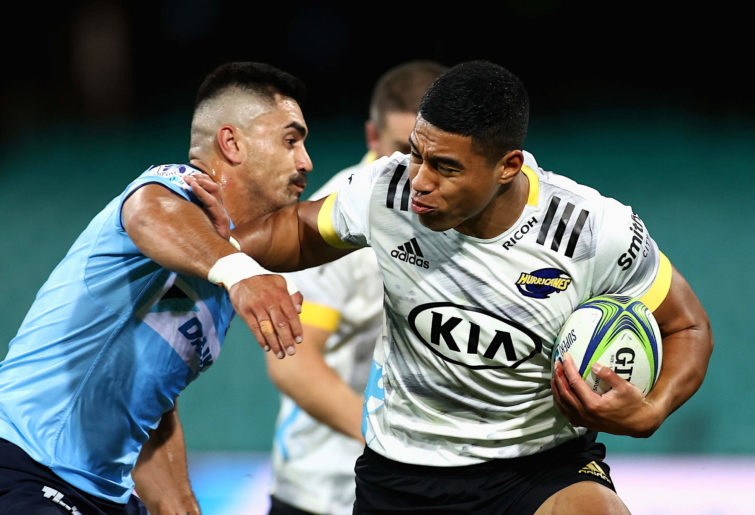
Salesi-Rayasi-755x515.jpg

Salesi Rayasi (Photo by Cameron Spencer/Getty Images)

Option 1
The first idea is to implement a draft that would distribute talent more equally across all teams in the competition. It’s rugby socialism, essentially moving some New Zealand players to Australian teams and shifting a number of Aussie players to New Zealand teams. A salary cap and draft would be required in this scenario to ensure fair-ish player distribution.

This would create a more balanced Super Rugby competition, would probably make the Wallabies stronger and would probably make the All Blacks weaker. Sounds awesome! It’s a good option, but the only problem is that the New Zealand Rugby Union would never, ever in a billion years agree.

Option 2
My next option is that Rugby AU finds a fairy godmother billionaire who is willing to sprinkle a portion of his/her fortune on Australian rugby – paging Andrew Forrest; other eligible billionaires may also apply. With this extra dough we could compete with European and Japanese club wages and get some of our better players back on home soil. We might also attract a higher class of foreign talent, the odd league mercenary and a few of those schoolboy superstars who flirt with union before signing with league.

I really like this option, but unfortunately fairy godmothers are in short supply.

Sports opinion delivered daily 


function edmWidgetSignupEvent() window.roarAnalytics.customEvent( category: 'EDM', action: 'EDM Signup', label: `Shortcode Widget`, );

Option 3
Next: remove two or possibly even three of our teams and consolidate their better players in the surviving teams, essentially what the New Zealand Rugby Union tried to force on us last year. The remaining teams would likely be more competitive.

A quick look at the history of Super Rugby shows we became much less competitive as we added teams. With three teams in Super 12 over ten years we had 11 semi-finalists who made six finals and won the competition twice. With four teams in Super 14 and Super Rugby (after the Force were cut) over seven years we had four semi-finalists who made one final. With five teams over seven years we had six semi-finalists and three finalists, winning the competition twice.

So who gets cut? New South Wales and Queensland have the votes on the Rugby AU board, so it’s the Force (again), the Rebels and maybe the Brumbies. We now have two or three possibly more competitive teams, but the damage to the game would be huge. Supporters of the defunct teams would be somewhere between devastated and furious, Rugby Australia would have even less revenue, there would be less content for the local broadcaster, promising players would be denied a pathway or forced overseas et cetera.

I hate this option. I like the Force and the Rebels and I support the Brumbies. Our fans deserve a team to follow. Also, the Waratahs suck.
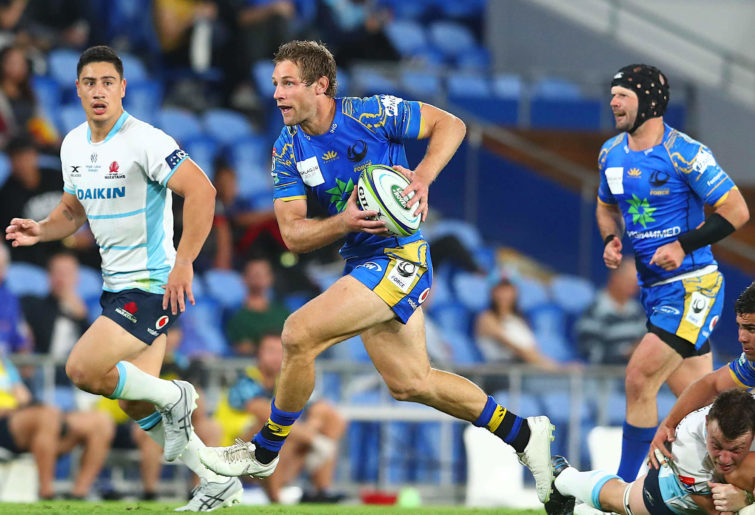
kyle-godwin-runs-the-ball-755x515.jpg

Kyle Godwin. (Photo by Chris Hyde/Getty Images)

Option 4
Let’s bite the bullet and go it alone. Why do we need to torture ourselves with weekly comparisons to the clearly superior Kiwi teams or tear the game apart by cutting teams?

There a few options here, so let’s consider two. First, we keep Super Rugby AU and double the length. Each team plays four games against the others, giving us a 22-week competition, including four byes and finals. It’s perhaps the least risky option, but playing the same team four times in season may start to feel a bit stale.

A second option is a tweaked NRC model. Add three teams – one from NSW (Western Sydney makes sense), one from Queensland, and either another NSW team or a Fijian or Pacifica team. Eight teams playing home and away will give us an 18-week competition with two byes each and two weeks of finals.

Assuming no private equity or magic billionaire money, our existing funds would have to cover the wages and costs of three new teams, which would mean pay cuts for all existing players, and some form of salary cap and/or draft would be required too. Many of our highest profile players would leave for overseas clubs, to be replaced by club players on much lower wages.

Our policy of only selecting local players for the Wallabies would also have to be abandoned, as most of the Wallabies squad would be playing overseas until the local competition matured and was able to offer higher wages, which could take a decade or more. If the competition were successful, it could be expanded to ten or 12 teams in the future.

Obviously there are a few more options than what I’ve touched on above. If there’s a good response to this article, I will write a follow-up considering options for a domestic rugby competition in more detail.

Original source: https://www.theroar.com.au/2021/05/17/why-australian-rugby-should-go-it-alone/

https://therugbystore.com.au/why-australian-rugby-should-go-it-alone/

Brumbies fall heartbreakingly short in titanic struggle with Crusaders

Brumbies flyhalf Noah Lolesio has missed a sideline conversion on the final siren as the Crusaders escaped with a thrilling 31-29 win in Christchurch.

The Crusaders were cruising to victory after skipping out to a 31-17 lead with just 10 minutes remaining in Saturday night’s Super Rugby Trans-Tasman clash.

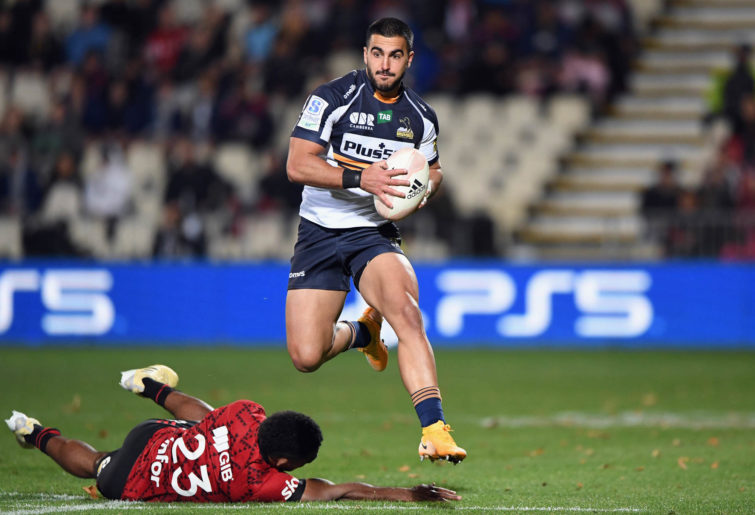
A magical solo try to Brumbies fullback Tom Banks – when he shook off three tacklers in a 62 metre sprint to the line – got the visitors back in the game in the 72nd minute.

A 79th-minute yellow card to Crusaders substitute Ereatara Enari further opened the door, and the margin was just two points when a clever inside flick from Brumbies winger Tom Wright sent No.8 Rob Valetini over.

It left Lolesio with a chance to draw the game, but he squeezed the tough sideline conversion to the left to narrowly miss as the final siren sounded.

Lolesio hunched over in disappointment, but his teammates ran in to console him after what had been a remarkable late fightback from the Brumbies.

“Definitely proud of the effort, especially the fight we showed in the second half,” Brumbies captain Allan Ala’alatoa told Stan Sport after the match.

“Looking at the boys, we’re devastated at the loss. We came out here to win.”

Tom-Wright-755x515.jpg

Tom Wright charges forward. (Photo by Kai Schwoerer/Getty Images)


Crusaders captain David Havili praised the Brumbies for their fighting effort.

“The Brumbies came and took it up to us,” he said.

“(We had) tired legs from last week, but you can’t blame that. It’s a new competition and you’ve got to step up. It wasn’t good enough, but we came away with the win.”

The first 20 minutes was a dour affair filled with failed scrums and uncharacteristic handling errors.

The one bright spark was a fifth-minute try to flanker Ethan Blackadder, who got on the end of a nice Crusaders move to touch down in the corner.

Scott Sio barged over on 27 minutes to give the Brumbies the lead, but the Crusaders hit back with two more tries to finish the half.

Flyhalf Richie Mo’unga threw a dummy to fool the Brumbies defence in the 29th minute.

And seven minutes later Havili intercepted a pass from Brumbies scrumhalf Ryan Lonergan before embarking on a 50 metre sprint to the line, giving the home side a 19-7 halftime lead.

The Crusaders dominated the early stages of the second half, but it was the Brumbies who struck first when Simone picked up the ball from a breakdown and touched down under no pressure.

Brumbies substitute Luke Reimer pulled off a brilliant try-saving tackle to deny Blackadder in the 60th minute, but tries to Brendon O’Connor and Cullen Grace within six minutes of each other looked to have sealed the win.

The Brumbies attacked hard at the death, and they came within a whisker of coming away with the draw in a gutsy effort against the NZ champions.

Original source: https://www.theroar.com.au/2021/05/16/brumbies-fall-heartbreakingly-short-in-titanic-struggle-with-crusaders/

https://therugbystore.com.au/brumbies-fall-heartbreakingly-short-in-titanic-struggle-with-crusaders/

Premiership: Leicester 35-29 Harlequins - Genge scores brace as Tigers beat play-off contenders

Leicester Tigers survive a ferocious fightback to check Harlequins' play-off hopes with a thrilling 35-29 win at Welford Road.

Original source: http://www.bbc.co.uk/sport/rugby-union/57088563

https://therugbystore.com.au/premiership-leicester-35-29-harlequins-genge-scores-brace-as-tigers-beat-play-off-contenders/

Tuesday, 18 May 2021

Lions tour schedule revised due to COVID

The British and Irish Lions’ match schedule for their rugby tour of South Africa has been changed to mitigate the risks posed by the coronavirus pandemic, while there will almost certainly be no fans at any of the games.

The announcement on Friday gave final confirmation that the tour will go ahead in July and August with the Lions playing eight games, including three Tests against the reigning world champion Springboks.

But seven of the eight games will now be in either Johannesburg or Cape Town, with the other in the capital, Pretoria. That means the Lions will not travel to Durban, Port Elizabeth or Nelspruit, as originally planned for the tour.

alun-wynn-jones-british-and-irish-lions-755x515.jpg

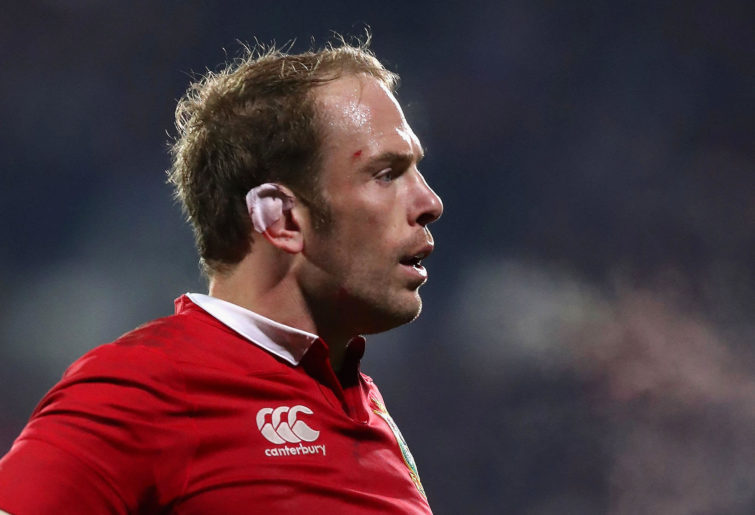
(Photo by David Rogers/Getty Images)

SA Rugby chief executive Jurie Roux said they were hopeful that the South African government might relax some restrictions on fans being allowed back into sports stadiums by July “but, for the moment, we are planning for an event behind closed doors.”

The Lions regularly take tens of thousands of their supporters with them on their once-every-four-years tours to South Africa, New Zealand and Australia. Their fans’ presence is a key part of the spirit of the tour, but the pandemic has likely meant that can’t happen this time.

“While things will undoubtedly look different to a typical Lions tour, together with SA Rugby we are determined to deliver an uninterrupted series for the players who will take the field, as well as the many millions of people watching at home,” British and Irish Lions managing director Ben Calveley said.

“We would like to thank all Lions supporters for their patience and understanding as we continue to navigate our way through the impact of the pandemic.”

Original source: https://www.theroar.com.au/2021/05/15/lions-tour-schedule-revised-due-to-covid/

https://therugbystore.com.au/lions-tour-schedule-revised-due-to-covid/

Alex Goode: Saracens and England full-back returns from loan for Championship run in

Saracens welcome back full-back Alex Goode from his season-long loan at NEC Green Rockets in Japan.

Original source: http://www.bbc.co.uk/sport/rugby-union/57107926

https://therugbystore.com.au/alex-goode-saracens-and-england-full-back-returns-from-loan-for-championship-run-in/

Coach’s Corner Issue 12: Can Taniela Tupou keep it straight for Super Rugby Trans-Tasman?

Statistically, who are the most effective loose forwards in Super Rugby AU and Super Rugby Aotearoa?

– KiwiHaydn

How does Fraser McReight go about his business and what roles does he fulfil in the reds attack and defence?

– Numpty

Everyone rates the work rate of carries and tackles etc of McReight, how does he compare to Hooper last year in this regard?

– PeterK

With the new Antipodean crossover competition kicking off this weekend, it is the right time to return to this question, which originally spanned the back-rows on both sides of the Tasman.

The following table includes the top All Black candidates from Super Rugby Aotearoa in 2021, plus the likeliest Wallaby counterparts in each position. Michael Hooper’s 2020 Super Rugby AU stats are also added as a point of comparison. First, on attack:

Min played Mins between carries Gainline +/- Defenders beaten/offloads Decisive outcomes (breaks/assists) Lineouts won/stolen
Akira Ioane 437 7.3 11 22/5 8 4
Luke Jacobsen 565 9.6 12 8/8 6 11+2
Shannon Frizell 593 6.2 16 22/12 9 22
Rob Valetini 790 9.5 19 17/4 7 3
Ardie Savea 439 8.4 14 16/5 8 1
Dalton Papalii 422 16.9 7 6/5 6 2+1
Du’Plessis Kirifi 469 13 4 5/0 4 1
Sam Cane 291 14.6 1 3/2 2 2
Fraser McReight 707 9.9 19 12/5 15 0
Michael Hooper* 616 8.2 11 5/7 4 1+1
Hoskins Sotutu 600 6.5 18 15/9 11 19
Harry Wilson 556 7.3 1 4/4 5 6

*2020 statistics

Some fascinating pointers to the different back-row expectations in Australia and New Zealand emerge from this table.

Australian number sevens like Fraser McReight and Michael Hooper are expected to contribute far more as ball-carriers than their Kiwi counterparts.

New Zealand number sixes and eights do the bulk of the ball-carrying and lineout winning, with the figures posted by Hoskins Sotutu, Akira Ioane and Shannon Frizell throwing Harry Wilson’s becalmed season into sharper relief.

Rob Valetini’s numbers hold up well in the comparison – there may be a case for shifting him to number eight in 2021 for the Wallabies.

Ardie Savea remains an enigma, the ball-carrying impact of a number six or eight built into the athletic body of a number seven.

Now, the figures on defence:

Mins played Mins between tackles Tackle completion Passive tackles Turnover/discipline in contact
Akira Ioane 437 10.7 91% -5 -7
Luke Jacobsen 565 10.7 88% -12 -1
Shannon Frizell 593 8.8 88% -9 -10
Rob Valetini 790 7.9 93% -9 -5
Ardie Savea 439 12.5 80% -6 2
Dalton Papalii 422 5.6 95% -9 1
Du’Plessis Kirifi 469 4.9 89% -11 -7
Sam Cane 291 4.8 94% -1 0
Fraser McReight 707 6.4 95% -7 -4
Michael Hooper* 616 6.1 90% -16 -3
Hoskins Sotutu 600 14 90% -15 -5
Harry Wilson 556 6.8 89% -13 -9

*2020 statistics

New Zealand number sevens are far more active on defence than their sixes and eights with extremely high work rates – averaging one tackle every five minutes. This may represent the more varied range of attack in New Zealand, with the ball moved wider more often.

The selection emphasis for a number six or eight in New Zealand lands squarely on ball-carrying and lineout ability – a perception backed up by Dave Rennie’s initial picks for the Wallabies in 2020. In Australia, there is more emphasis on all-rounders who can contribute in attack and defence, but less at the set-piece.

The premier opensides all show excellent discipline in contact, with takeaways balancing the number of balls given up and penalties conceded in the tackle.

The contest between Fraser McReight and the Kiwi opensides promises to be one for the connoisseur, and there is every reason to believe the young Queenslander will emerge from the competition with his reputation enhanced.

fraser-mcreight-runs-the-ball-755x515.jpg

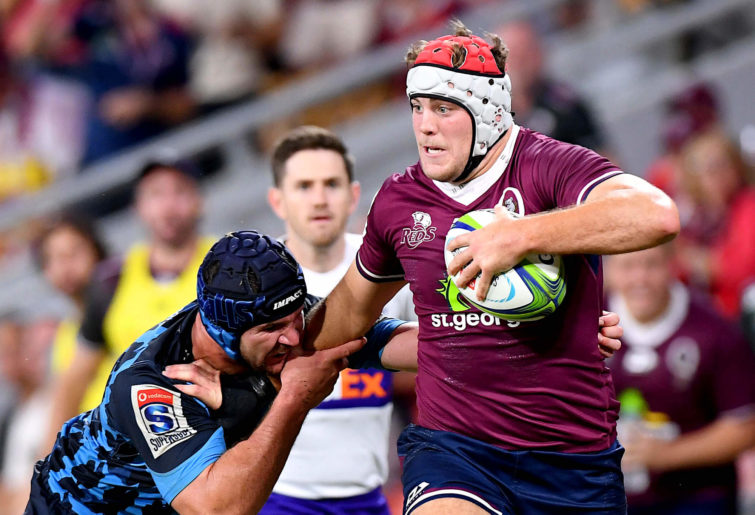
Fraser McReight. (Photo by Bradley Kanaris/Getty Images)

I would like to know how you think international referees would have handled the scrums in the Super Rugby AU final? If he is within the law, then Taniela Tupou is an unbelievable asset for the Wallabies. If Tupou’s scrummaging is a problem, then his team value is going to be very questionable.

– Ray

If he is such a fantastic scrummager and could scrum straight and square, why doesn’t he?

– David

Ethan de Groot of the Highlanders has made noises about having a plan to deal with Taniela Tupou on Friday night in Dunedin. He states that Aussie refs have been lenient on him regarding his scrumming technique and that he will not get the same leeway here. Do you think De Groot’s statement has validity?

– Otago Man

Typically, coaches or players try to influence the referee’s perception beforehand because they are worried about negative impacts in a specific area of the game. I suspect this is the case with Ethan de Groot.

Let’s rewind Super Rugby AU 2021 a short distance, back to my article at the end of March, to provide some context for the Queensland scrum.

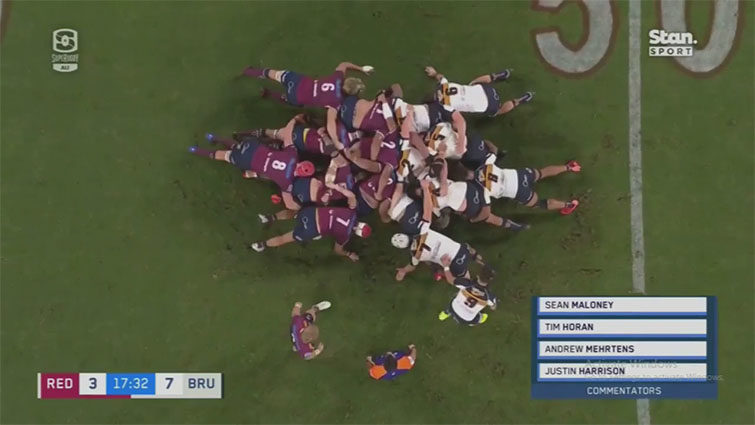
The second half of the piece examined the Reds’ habit of spinning the scrum around their loosehead in order to win penalties. Since then, they replaced Dane Zander with Feao Fotuaika at loosehead and started Brandon Paenga-Amosa more regularly at hooker alongside him. The scrums stopped spinning and started moving forward on both sides together:

There is no attempt to walk around the loosehead side in this example from the first half of the match against the Force. There is some shift from right to left but the scrum goes forward equally on both sides. At the referee’s eye level – without the spider-cam privileges enjoyed by a TV audience – it an easy call for the man in the middle.

The formation of the scrum is asymmetrical, not symmetrical. There is an open and a closed side. The player on the closed or tighthead side must contend with the pressure from two angles, exerted by the opposing hooker and loosehead prop. If he does nothing but scrum straight and square, he is a sitting duck to be popped out.

A good tighthead prop will fight back by changing his angle and body height to increase the discomfort for his opposite number:

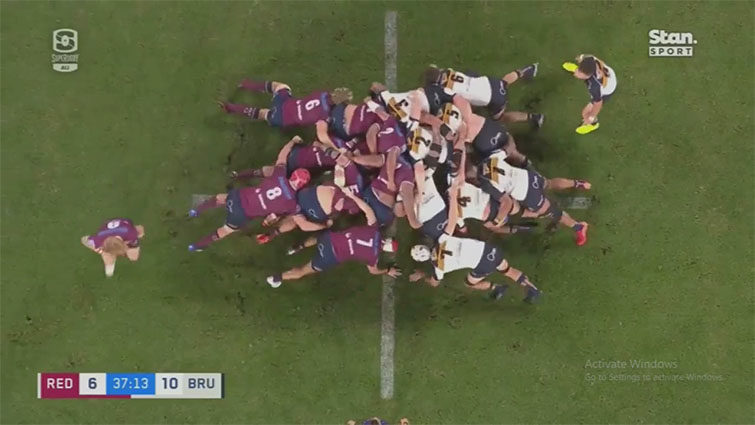
In this, the first scrum from the grand final, Brumbies loosehead Scott Sio is struggling to contain Taniela Tupou’s power. Tupou is able to drive past Sio and onto hooker Lachlan Lonergan, which leaves the ACT man facing in at a 90-degree angle to the far sideline, and eventually collapsing in the tunnel.

Paenga-Amosa and Fotuaika are pushing straight, and the scrum is moving forward on both sides:

Final-1-755x425.jpg

The alarm bells start ringing in the referee’s head when the scrum advances on only one side and begins to spin on its axis:

Final-2-755x425.jpg

There is no major difference in the angle taken by Taniela Tupou, who is still dominating his side of the front row. The difference is that Fotuaika is meeting sterner resistance from Allan Alaalatoa, and therefore the scrum begins to turn around the Queensland tighthead. That persuades Nic Berry to award a penalty against Tupou.

On at least one other occasion, he rewarded him in a very similar scenario:

Tupou’s angle is probably even steeper, but nonetheless it is clear that it is the Brumbies scrum which is fragmenting under pressure.

The tighthead prop is fully entitled to scrum in the gap between the two opponents facing him and change his angle when he smells weakness. When Ethan de Groot and Tupou come off the bench tonight, it is up to the Highlanders prop to do a better job than Scott Sio and Harry Lloyd could manage last Saturday.

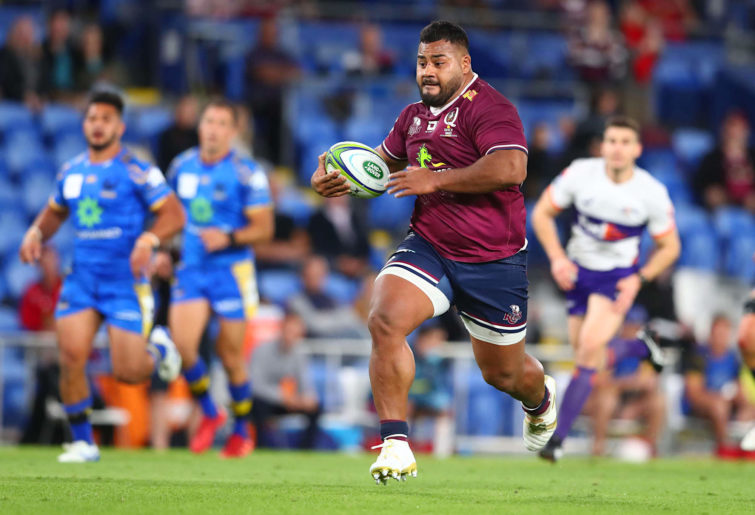
taniela-tupoou-line-break-755x515.jpg

Taniela Tupou. (Photo by Chris Hyde/Getty Images)

It would appear that the level of analyst information available to Australian players at top levels is deficient in comparison to that which players receive when playing for the likes of the Crusaders, La Rochelle, and Leinster. How far behind are Australian teams in this area? Are the Brumbies ahead of the pack, despite their knife-edge losses to the Reds this season?

– Mzilikazi

Four of the coaching staff for the Boks during the World Cup honed their skills in Pro 14 at Munster. Rassie Erasmus, Jacques Nienaber, Felix Jones and Aled Walters. That has just reinforced the perception that rugby’s intellectual heartland now lies firmly in European territory.

– Just Nuisance

The gap is closing, and that is a function of the structure of the domestic competition now in place. Increased depth in the preparatory work is possible when the number of opponents is drastically reduced.

In the last full season of Super Rugby back in 2019, there were 16 rounds against 15 potential opponents from all over the world, with games played week-in, week-out, and considerable travel and recovery time eating into the portion set aside for preparation. In Super Rugby AU, there are four opponents and the travel is local. Most of the individual strengths and weaknesses will already be well known to the coaching staffs and players.

There were plenty of examples of great prep work during Super Rugby AU, which I have attempted to track throughout the season. Having said that, I would go along with Scott Fardy’s statement that players’ capacity to absorb information is probably still greater in the northern hemisphere.

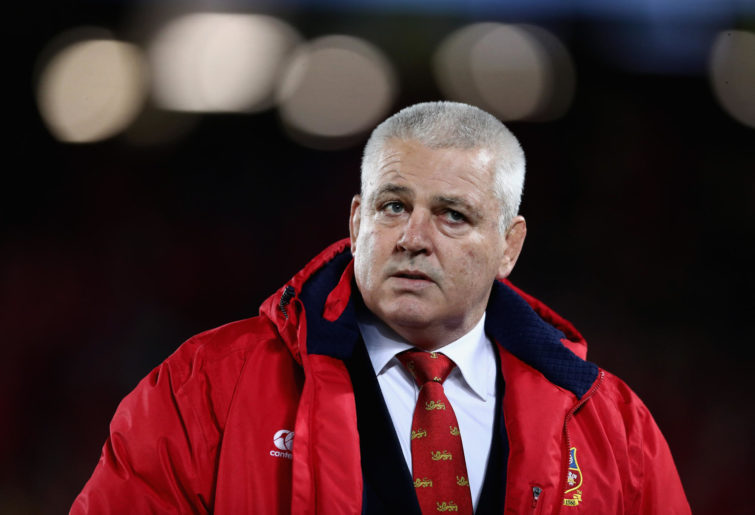
Warren-Gatland-British-and-Irish-Lions-755x515.jpg

British and Irish Lions coach Warren Gatland. (Photo by David Rogers/Getty Images)

The Lions’ coaching team apparently used their 37th selection to pick Saints’ Courtney Lawes, who is actually the most legitimate bruiser in the second row now; and the 36th pick may have been Elliot Daly, selected first as an outside centre. What can we tell from this? Did the Alun Wyn Jones-Maro Itoje-Iain Henderson-Johnny Hill stocks look a bit light or small or tame? Who starts at 13: Daly or Chris Harris?

– Harry Jones

It’s Lions watch time! The selection indicates that the Lions will look at either Courtney Lawes or Tadhg Beirne for number six in the Test series, with Maro Itoje and Alun-Wyn ahead of them in the second row.

There is no chance of Elliot Daly starting a Test at outside centre in South Africa. At least two England players who weren’t taken on tour (Henry Slade and Jonathan Joseph) are far better defenders in that spot – not to mention Jonathan Davies and Garry Ringrose.

Outside centre in particular, and the midfield from 9 to 13 in general, is much the weakest area of the selected Lions squad. I do not see Chris Harris as a 13 in the same class as those I’ve mentioned (or Manu Tuilagi, for that matter), and I believe the Lions will end up moving Robbie Henshaw there, with Bundee Aki at 12 and either Owen Farrell or Dan Biggar at flyhalf in the Tests.

Once again, many thanks to all of those who answered the callout for questions.

Original source: https://www.theroar.com.au/2021/05/14/coachs-corner-issue-12-can-taniela-tupou-keep-it-straight-for-super-rugby-trans-tasman/

https://therugbystore.com.au/coachs-corner-issue-12-can-taniela-tupou-keep-it-straight-for-super-rugby-trans-tasman/